SIGN IN YOUR ACCOUNT TO HAVE ACCESS TO DIFFERENT FEATURES

FORGOT YOUR PASSWORD?

FORGOT YOUR DETAILS?

AAH, WAIT, I REMEMBER NOW!
  • LOGIN

World Safety Forum MembershipsWorld Safety Forum Memberships

  • Home
  • About
  • Join
  • ESG Journals
  • Councils
  • LOGIN
SIGN UP
  • No products in cart.
  • Home
  • Sample Page
  • Sustainability Leaders
  • Chef Suresh Pillai: A Culinary Visionary Advancing UN SDG Goals Through Food and Education

Blog

Saturday, 08 November 2025 / Published in Sustainability Leaders

Chef Suresh Pillai: A Culinary Visionary Advancing UN SDG Goals Through Food and Education


Chef Suresh Pillai and IICM: Creating Opportunity Where It’s Needed Most—A Model for Sustainable Development in Hospitality


 His work, rooted in humility and driven by purpose, aligns powerfully with the United Nations Sustainable Development Goals (SDGs), particularly Goal 2: Zero Hunger and Goal 4: Quality Education. At the 2025 GSS ESG Safety Awards held at the House of Lords, London, Chef Pillai was honoured with the Global Sustainability Leader Award in the Hospitality Industry —a recognition that celebrates not only his culinary excellence but his transformative contributions to society.

Chef Suresh Pillai’s journey from a modest home in Kollam, Kerala, to the international culinary stage isn’t just impressive. It’s a quiet revolution. For someone who had to leave school after Class X, rising through some of the world’s most respected kitchens and eventually launching his own culinary institute wasn’t just a personal victory—it marked something larger. Success in the food industry doesn’t need to come stamped with a degree. It can be earned through skill, resilience, and access to opportunity.

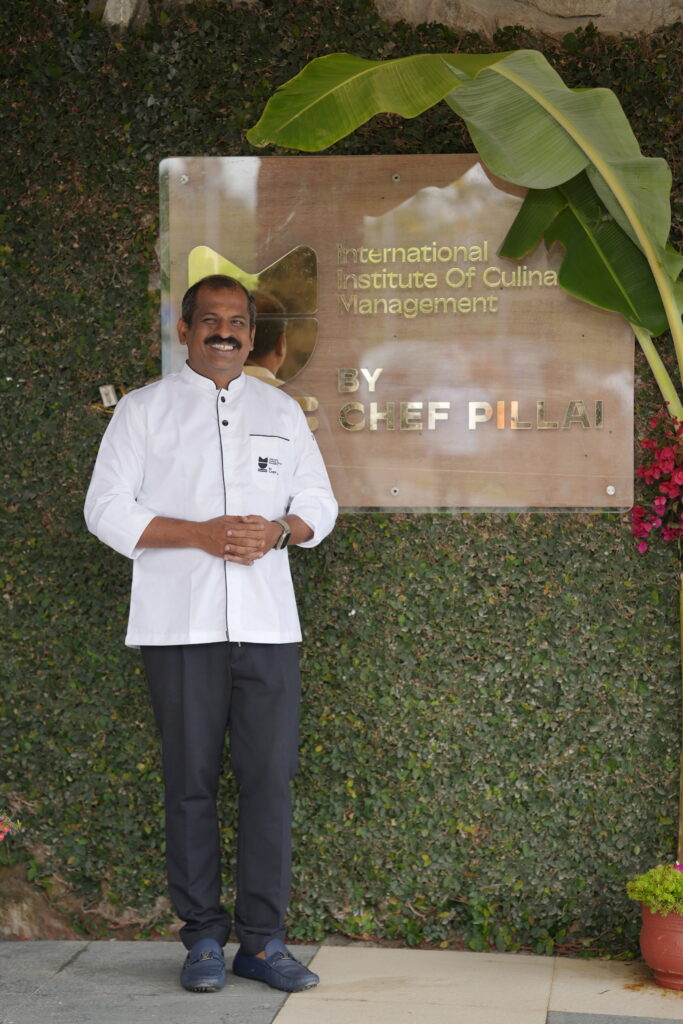
With the launch of the International Institute of Culinary & Management (IICM) in Kodaikanal, Chef Pillai is returning to the start. Not just to where he came from, but to the idea that talent deserves a fair platform. His focus isn’t only on training chefs. It’s about rethinking culinary education, breaking open an industry that often shuts out those without formal credentials, and making space for the next generation—no matter where they come from. This initiative directly supports the United Nations Sustainable Development Goal 4: Quality Education, by creating an inclusive, skill-based learning model that empowers youth from underserved backgrounds.

From Kollam to London and back again, Pillai’s early life was shaped by circumstance more than choice. He left school as a teenager to support his family. His first jobs weren’t in the kitchen, but he found himself drawn to it. He learned by watching, listening, doing—without a culinary school, without certificates. Just patience, discipline, and grit. Eventually, he made it into serious kitchens: Leela Hotels in India, Veeraswamy in London. Then came his appearance on BBC’s MasterChef: The Professionals, which introduced him to a global audience. But even with international acclaim, his perspective stayed grounded. The barriers he faced—especially early in his career—have never left him.

🎓 IICM: A Culinary Institute Built on Access and Equity

Chef Pillai’s most profound contribution to SDG 4: Quality Education is the founding of the International Institute of Culinary & Management (IICM) in Kodaikanal. This institute isn’t just about teaching recipes—it’s about rewriting the rules of culinary education.

•  One-Year Diploma Model: Six months of immersive, on-campus learning followed by a guaranteed six-month paid internship.

•  Three Specializations: Indian Culinary Arts, Professional Baking & Pâtisserie, and Food & Beverage Service Operations.

•  Limited Intake: Only 90 students per batch, ensuring personalized mentorship.

•  Inclusive Philosophy: Designed for students who lack formal credentials or financial backing.

Set on 40 acres in the serene hills of Kodaikanal, IICM offers a sanctuary for learning by doing. It’s a space where students from rural and underserved backgrounds can thrive, not just as chefs but as confident professionals.

IICM is not a luxury institute with a long-winded academic track. Its one-year diploma model is divided into six months of immersive, on-campus learning and a guaranteed six-month paid internship. For students without financial backing, that structure can be the difference between enrolling and walking away. Three focused streams are offered: Indian Culinary Arts, Professional Baking & Pâtisserie, and Food & Beverage Service Operations. The intake is capped at 90 students to allow for personalised mentorship and meaningful hands-on training. Set on 40 acres in the hills of Kodaikanal, the campus offers calm and focus—away from the chaos, and ideal for learning by doing.

But IICM’s real shift is philosophical. It’s built on access. On creating a space for those who’ve been left out because they didn’t go to the right schools, speak the right language, or fit the industry’s narrow idea of what a hospitality professional should look like. This approach is a direct contribution to SDG 4, ensuring inclusive and equitable quality education and promoting lifelong learning opportunities for all. By removing barriers to entry and offering paid internships, IICM enables students from economically challenged backgrounds to gain both education and income—an essential combination for sustainable development.

Pillai’s thinking around opportunity is visible in the choices he makes. When he hired a deaf and mute chef named Vipin in one of his restaurants, it wasn’t a gesture—it was recognition of talent where others only saw limitation. He also offered jobs and safety to two young men from Manipur displaced by conflict, relocating their families and helping them start over. These aren’t exceptions. They’re part of a consistent approach. Talent exists everywhere, but access does not. Pillai lived that imbalance. Now, he’s building something that levels the field for others. By creating dignified employment and food-based livelihoods, these actions align with SDG 2: Zero Hunger, which calls for ending hunger and ensuring access to nutritious food and sustainable food systems.

One of Pillai’s lasting contributions to the food industry has been his unwavering commitment to regional cuisine. He hasn’t reshaped Kerala food for the global stage—he’s brought it forward as it is: layered, specific, and rooted in tradition. That same respect for identity carries into IICM. Students are encouraged not just to master technique, but to understand the cultural and historical contexts of what they’re cooking. For those from smaller towns or rural areas who’ve been told their culinary roots aren’t “refined” enough, that’s a powerful shift. It’s not just about training chefs. It’s about building confidence through culture.

The traditional model of culinary education in India often doesn’t work for the people who need it most. It’s expensive, overly academic, and slow to deliver real-world skills. Many graduates finish their courses without the readiness—or the confidence—to lead a professional kitchen. IICM is a response to those gaps. The shorter course timeline means quicker entry into the workforce. The paid internships help students support themselves during training. Small batches allow for closer mentorship. But more than that, it’s about rethinking what makes someone “qualified.” Pillai didn’t have a degree when HR departments turned him away. He remembers being more skilled than some of the chefs working inside those kitchens—and still being told he didn’t meet the criteria. That memory remains. His goal now is to ensure no one else has to fight that same uphill battle.

IICM is still early in its story. With just 90 students per batch, its reach is intentionally limited. And even with a paid internship model, the cost of relocating to and living in Kodaikanal may be too high for some. Long-term industry recognition of the diploma will depend on consistent output and real-world success. But what Pillai has created is not a copy of the existing system. It’s a clear and credible alternative. That matters. It shows that education can be designed differently, and that excellence doesn’t need to be exclusive.

Chef Pillai hasn’t built his reputation on slogans or declarations. He’s done it through steady work, high standards, and a belief in merit over status. From his early days in Kollam to kitchens in London, and now at the helm of a culinary institute built from experience, he has stayed true to the values that shaped him. IICM might not have the glossy marketing of elite hospitality schools, but it has something better—authenticity. It’s built on real-world credibility, practical wisdom, and a belief that the right opportunity, given at the right moment, can change everything. He proved that in his own career. Now, he’s creating a place where others can prove it too.

Chef Suresh Pillai was selected as the Global Sustainability Leader in the Hospitality Industry at the GSS ESG Safety Awards held at the UK Parliament House of Lords, London. This recognition was not for celebrity status or commercial success, but for his measurable contributions to the UN SDG goals—Zero Hunger and Quality Education—through inclusive employment, culinary empowerment, and education reform. His work exemplifies how hospitality can be a vehicle for social justice, economic upliftment, and cultural preservation. By creating employment for displaced youth, hiring differently abled chefs, and designing a curriculum that respects regional identity, Pillai has embedded sustainability into every layer of his professional practice.

He always addresses the audience with lots of love in his mother tongue, “Namaskaram koottukare,” and spreads love in real life through his humble initiatives. Whether mentoring students, hiring overlooked talent, or preserving regional cuisine, Chef Pillai’s work is a quiet revolution—one that nourishes both body and spirit, and one that continues to redefine what sustainable leadership looks like in the hospitality industry.

His model is replicable. It offers a blueprint for how culinary education can be restructured to serve those who need it most. It shows that sustainability isn’t just about environmental practices—it’s about people. It’s about creating systems that uplift, include, and empower. Through food and education, Chef Pillai is doing just that. His institute doesn’t just train chefs—it cultivates confidence, preserves culture, and creates opportunity where it’s needed most.

In a world where education and employment are often gatekept by privilege, Chef Pillai is building bridges. His leadership is rooted in compassion, and his work continues to create opportunity where it’s needed most. By aligning culinary education with the principles of sustainability and inclusion, he is redefining success in the hospitality industry. His story proves that the right opportunity, given at the right moment, can change everything. And now, through IICM, he’s creating a space where others can prove it too.

Sources:

https://iicmglobal.com/

https://en.wikipedia.org/wiki/Suresh_Pillai

https://www.instagram.com/chef_pillai/

  • Tweet
Tagged under: chef pillai, iicm by chef pillai, rcp group, sustainability leader

Leave a Reply Cancel reply

Your email address will not be published. Required fields are marked *

Recent Posts

  • Pioneering OH&S Excellence in India’s Green Energy Transformation
  • Chef Suresh Pillai: A Culinary Visionary Advancing UN SDG Goals Through Food and Education
  • Adani Hazira Port: A Beacon of Safety Excellence and a Model for the Industry
  • Gamification of Safety & its impact on enhancing Safety Culture.
  • Global Safety Summit

Recent Comments

No comments to show.

Recent Posts

  • Pioneering OH&S Excellence in India’s Green Energy Transformation

    Pioneering OH&S Excellence in India’s Green Ene...
  • Adani Hazira Port: A Beacon of Safety Excellence and a Model for the Industry

    A Legacy of Leadership Adani Hazira Port Ltd. i...
  • Gamification of Safety & its impact on enhancing Safety Culture.

    Game On. Safety On! The global workplace safety...
  • Global Safety Summit

    The 3rd Global Safety Summit International...
  • Safest Workplace™ Rating – by World Safety Forum UK

    The Safest Workplace™ Rating is a distinguished...

Recent Comments

    Archives

    • November 2025
    • October 2025
    • July 2025
    • January 2025
    • February 2017

    Categories

    • GSS
    • International Safety Awards
    • Ratings
    • Safety Innovation
    • Sustainability Leaders

    Meta

    • Log in
    • Entries feed
    • Comments feed
    • WordPress.org

    WORLD SAFETY FORUM 

    WSF is the fast-growing professional network in Health Safety and Environment Social Governance advocating industries in compliance, supporting governments in policy making and forwarding the industrial Sustainable Development Goals. Global Safety Summit is the Annual Flagship Conference and Award ceremony by WSF. Industrial Awards is encouraging the best practices in Safety Health and Environment Social Governance ESG. WSF propagates the voice of industries viz oil and gas, steel, powerplants, renewable energy, construction, textiles, pharmaceuticals, FMCG, Food and Beverages, Supply Chain and Logistics, Aviation, Agriculture, Road and Transportation, etc to Government and Agencies

    COMPANY

    • Forbes2024
    • Linkedin
    • YouTube
    • Facebook
    • GSS Linkedin
    • GSS Instagram

    Contact us

    Address: Level 30, The Leadenhall Buildin, 122 Leadenhall Street, London, United Kingdom, EC3V 4AB

    Email : memberships@worldsafetyforum.co.uk

    Phone: +447983683123


    © 2025 world safety forum | All rights reserved

    Largest growing membership community for Health Safety Environment & ESG Professional as well as Enterprises

    TOP