
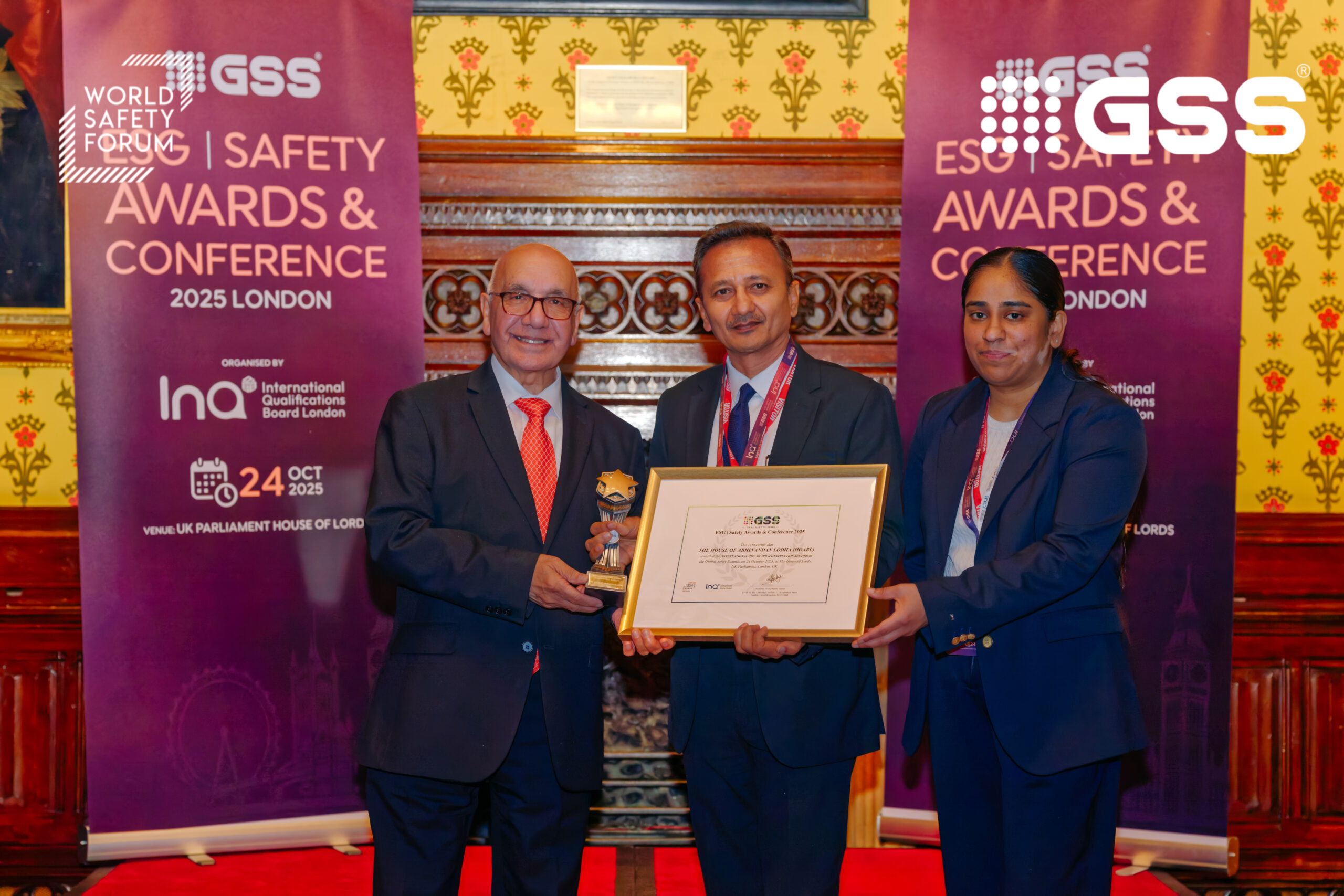


In today’s business landscape, growth is not defined by scale alone but also by responsibility, towards people, processes, and the environment. The House of Abhinandan Lodha (HoABL) has embraced this philosophy from the outset, embedding occupational health, safety, and sustainability into the fabric of its operations. This balance of innovation and responsibility anchors its journey as India’s most dynamic consumer-tech brand in real estate.
The House of Abhinandan Lodha, or HoABL, is India’s fastest-growing consumer tech brand in real estate, transforming what it means to own land. Born from a vision to democratize land ownership, it is dedicated to simplifying the process through technology and positioning land as an appreciating wealth asset. By combining innovation, marketing, and distribution strength, HoABL has disrupted the status quo, making land ownership more accessible, flexible, and secure.

In just a few years, HoABL has turned what was once complex and intimidating into a seamless, digital-first experience trusted by over 6,000 landowners worldwide. With more than 13 million sq. ft. of land sold and 30 million sq. ft. under development across 14 locations, the company continues to set new benchmarks. Every initiative is designed with intent, to disrupt convention, create impact at scale, and build a brand rooted in credibility and innovation.

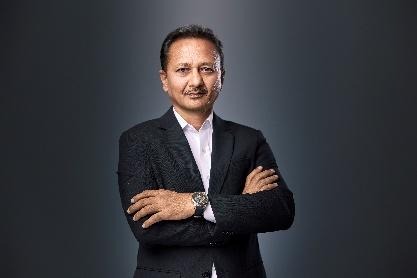
Abhinandan Lodha, Chairman, remarked,
“Safety, to us, is not an act of compliance but an expression of purpose. It reflects who we are and how we choose to build, with foresight, empathy, and integrity. At The House of Abhinandan Lodha, our ambition has never been limited to developing land; it has always been about shaping a future where progress and protection coexist seamlessly.”

Samujjwal Ghosh, CEO, said,
“At The House of Abhinandan Lodha, growth is built on the strength of people and the systems that protect them. Our focus on occupational health and safety is not just about safeguarding the present, it’s about enabling sustainable progress and setting new standards for the industry.”

Shivayogi Hiremath, CPO, noted,
“Our safety practices are designed not just to meet standards but to redefine them. Every project is a reflection of our belief that innovation and safety must advance together. By embedding OHS into our planning, execution, and culture, we are building environments where people thrive, and excellence becomes routine.”
This outlook reflects the company’s broader vision, where progress is inseparable from accountability, and expansion is balanced by the responsibility to protect and sustain. It is this foundation that extends naturally into HoABL’s occupational health and safety journey.
Safeguarding People, Processes, and the Planet: The OHS Commitment of The House of Abhinandan Lodha
Occupational Health and Safety (OHS) and Environmental Health and Safety (EHS) stand at the intersection of human well-being, sustainable growth, and operational resilience. For The House of Abhinandan Lodha (HoABL), these are not check-box obligations but strategic pillars that shape every project, process, and workplace interaction. The organisation recognises that safety is not merely the absence of incidents; it is the presence of systems, behaviours, and values that protect people, strengthen processes, and secure long-term environmental stewardship.
At its core, HoABL’s OHS vision is about embedding safety into the DNA of operations. This extends from robust risk assessments and hazard controls to fostering a culture where every individual from employees, to contractors, to all stakeholders, takes ownership of safety. Such an approach ensures not only compliance with statutory frameworks but also creates an environment of trust, accountability, and continuous improvement.
Strategic Objectives and Systems
The Safety and Sustainability Department at HoABL operates with well-defined objectives. These include improving safety culture through awareness and training, ensuring compliance with all legal requirements, implementing the organisation’s EHS management system, and establishing strong preventive controls against workplace risks and pollution. Equally central are initiatives in health and welfare facilities, annual EHS micro-planning, and environmental safeguards.
This structured approach is underpinned by the PDCA (Plan-Do-Check-Act) cycle, through which policies are translated into operational plans, training calendars, inspection checklists, audits, and corrective measures. The result is a living system that is responsive to challenges, measurable in its outcomes, and accountable to both management and workforce.
Employee Engagement and Safety Culture
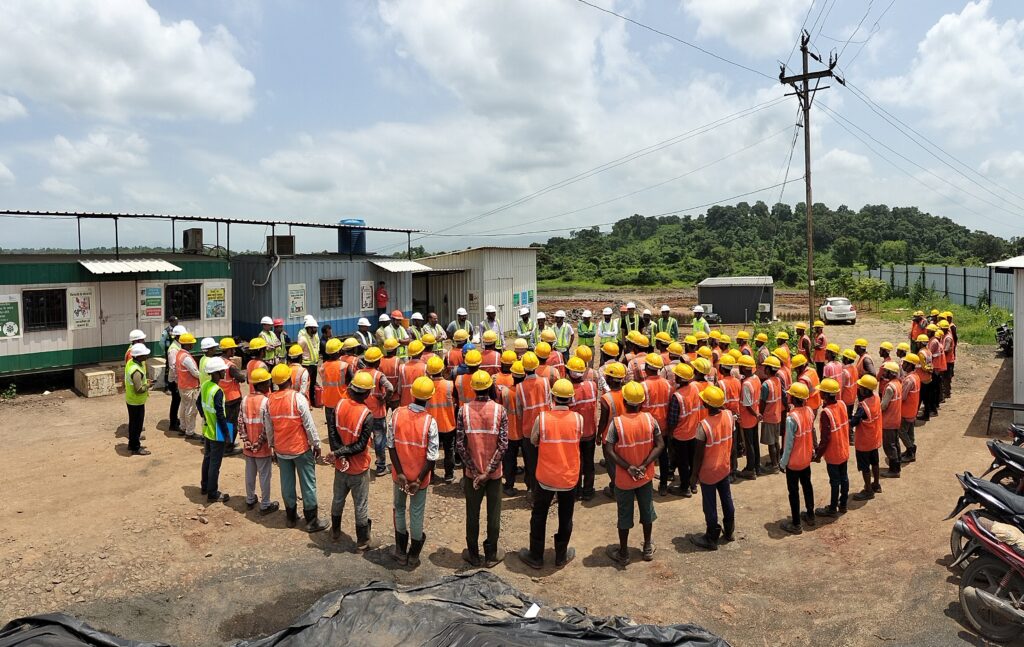
True safety is sustained not by manuals but by participation. HoABL has developed an extensive framework for employee and contractor engagement. Pre-construction kick-off meetings orient contractors to statutory and site-specific safety expectations. Project EHS Core Committees ensure worker representation in safety decisions, while joint project safety walkdowns and inspections cultivate transparency and accountability on the ground.
Unique practices such as the KYT – Kiken Yochi workshops, adapted from Japanese methodologies, enable proactive hazard identification and behavioural interventions. Campaigns like “Bar Bar Samjhao Suraksha Abhiyan” reinforce safe practices through repeated counselling and on-the-spot corrective measures. These initiatives embed safety leadership not only at the organisational level but also at the level of individual behaviour, bridging the gap between policy and practice.
Training and Knowledge Building
Knowledge is one of the most powerful risk controls. HoABL runs a comprehensive training calendar that spans induction, job-specific training, and trade-specific modules. Facilities such as on-site safety training centres, safety parks with mannequins, and lesson-based training plans strengthen retention. Periodic safety awards and recognition programs further sustain motivation.
From fire safety to defensive driving, from handling tools to awareness on environmental protection, training at HoABL reflects the diversity of risks its projects encounter. By ensuring all of our management staff and new workers undergo OHS training and pre-employment medical checks, the company ensures readiness, resilience, and responsibility across its workforce.
Infrastructure, Welfare, and Medical Care
Safety is inseparable from welfare. HoABL invests in site infrastructure such as PPE inventories, safety signage, fire-fighting equipment, medical vans, and tie-ups with hospitals. Labour accommodations are designed with dignity in mind, featuring porta cabins, purified drinking water, kitchens, and recreational spaces. Pre-employment and periodic health checks ensure worker fitness, while medical camps extend care to staff and surrounding communities.
Such measures emphasise that OHS is not just about preventing accidents, it is about enabling a healthier, more secure ecosystem for all stakeholders.
Sustainability and Social Responsibility
Beyond occupational safety, HoABL has integrated environmental and social dimensions into its operations. Green practices such as tree transplantation, water conservation using hydrogels, and LED-based energy savings reduce environmental footprints. The company is also a founding member of IGBC, underlining its commitment to sustainable development.
On the social front, workers benefit from welfare registrations, subsidised meals, insurance coverage, and financial aid for education, maternity, or medical emergencies. Local communities are supported through mobile clinics, free medical check-ups, and awareness drives, reflecting the company’s belief that safety and well-being must extend beyond project boundaries.
Conclusion
The House of Abhinandan Lodha’s OHS journey is not a collection of isolated measures but a cohesive framework, anchored in strategy, executed through systems, and lived through culture. From audits to housekeeping, sustainability programs to worker engagement, every initiative is deliberate and impactful.
The result is a workplace where risks are anticipated, compliance is exceeded, and safety is not a slogan but a lived value. In this lies the true measure of progress: protecting people, enabling processes, and sustaining the environment for generations to come.
Disclaimer: ‘House of Abhinandan Lodha’ has been established in 2020 and is not, in any manner, associated with ‘Lodha’ or ‘Lodha Group’
