SIGN IN YOUR ACCOUNT TO HAVE ACCESS TO DIFFERENT FEATURES

FORGOT YOUR PASSWORD?

FORGOT YOUR DETAILS?

AAH, WAIT, I REMEMBER NOW!
  • LOGIN

World Safety Forum MembershipsWorld Safety Forum Memberships

  • Home
  • About
  • Join
  • ESG Journals
  • Councils
  • LOGIN
SIGN UP
  • No products in cart.
  • Home
  • Sample Page
  • Uncategorized
  • From Stigma to Support: Redefining Mental Health Leadership in the ConstructionIndustry

Blog

Monday, 23 March 2026 / Published in Uncategorized

From Stigma to Support: Redefining Mental Health Leadership in the ConstructionIndustry

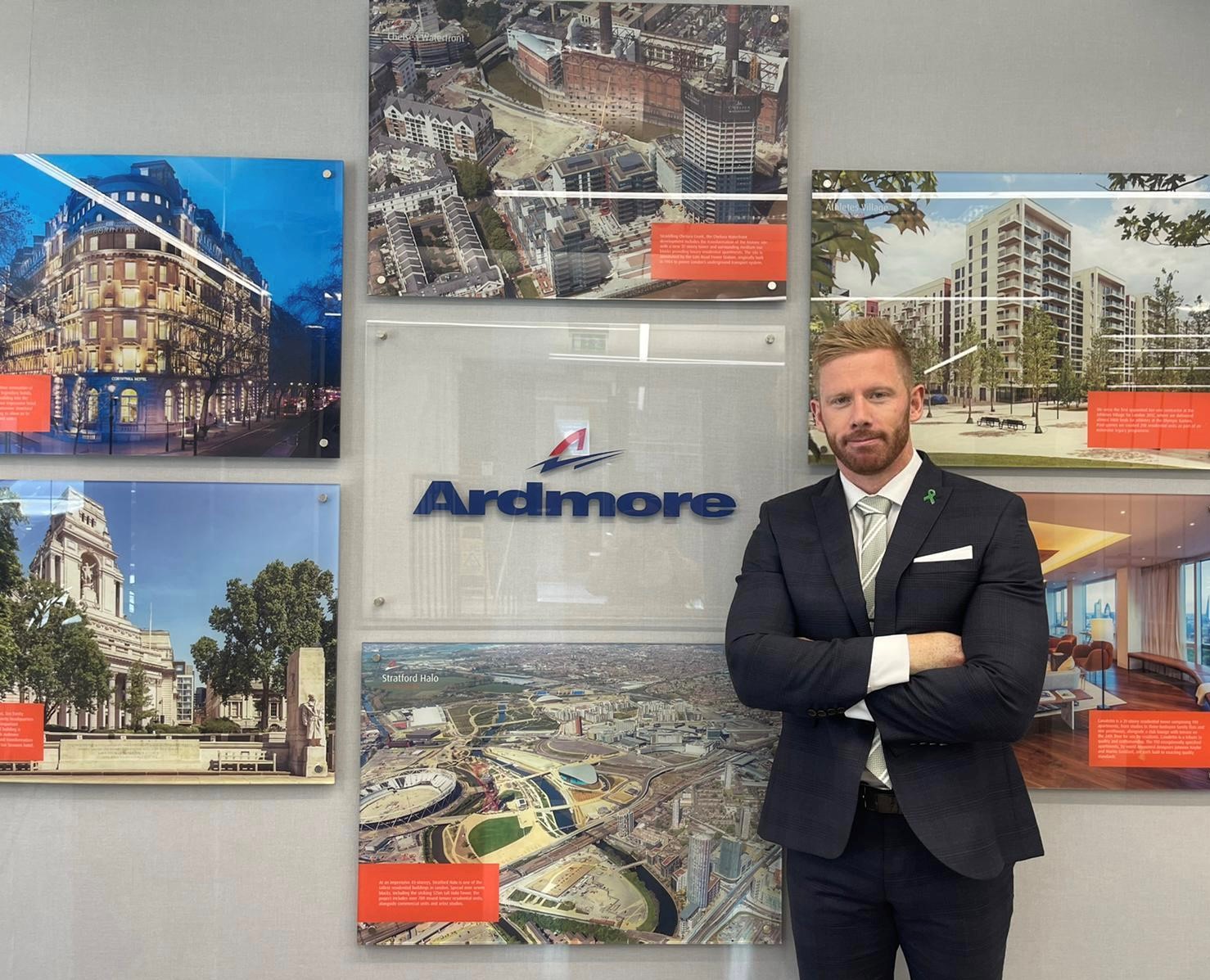
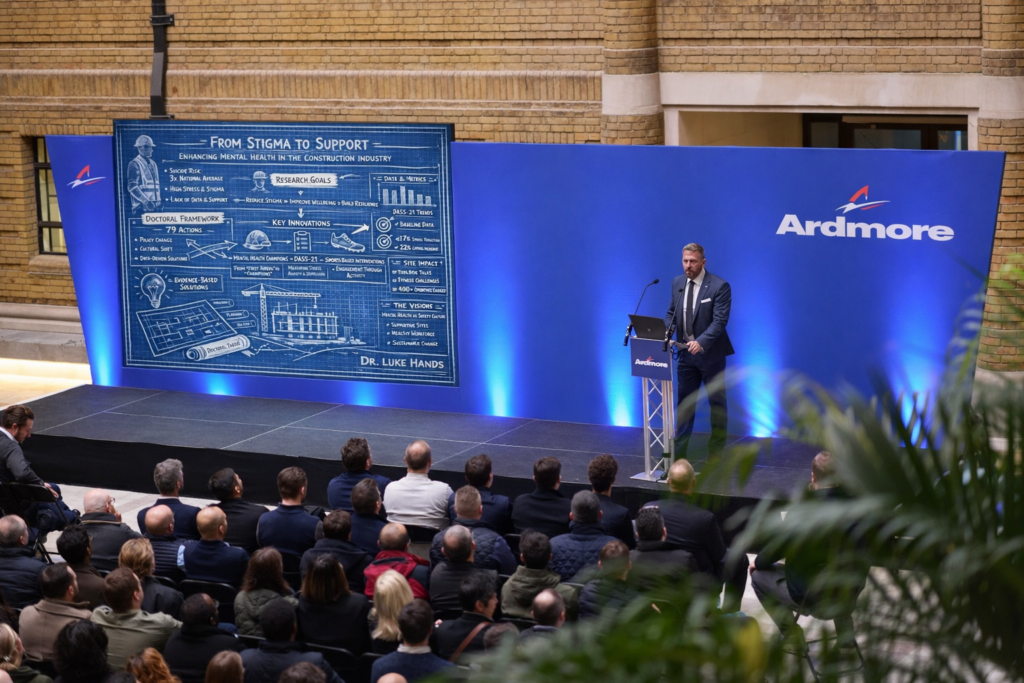
By Dr Luke Hands, Group Director of Health, Safety, Environment & Quality, Ardmore Group

The construction industry has made extraordinary progress in physical safety over the last fifty years.
Fatal accident rates have fallen, risk management systems have matured, and data-led approaches
to site safety are now firmly embedded. Yet despite these advances, one critical area has lagged
behind: mental health.
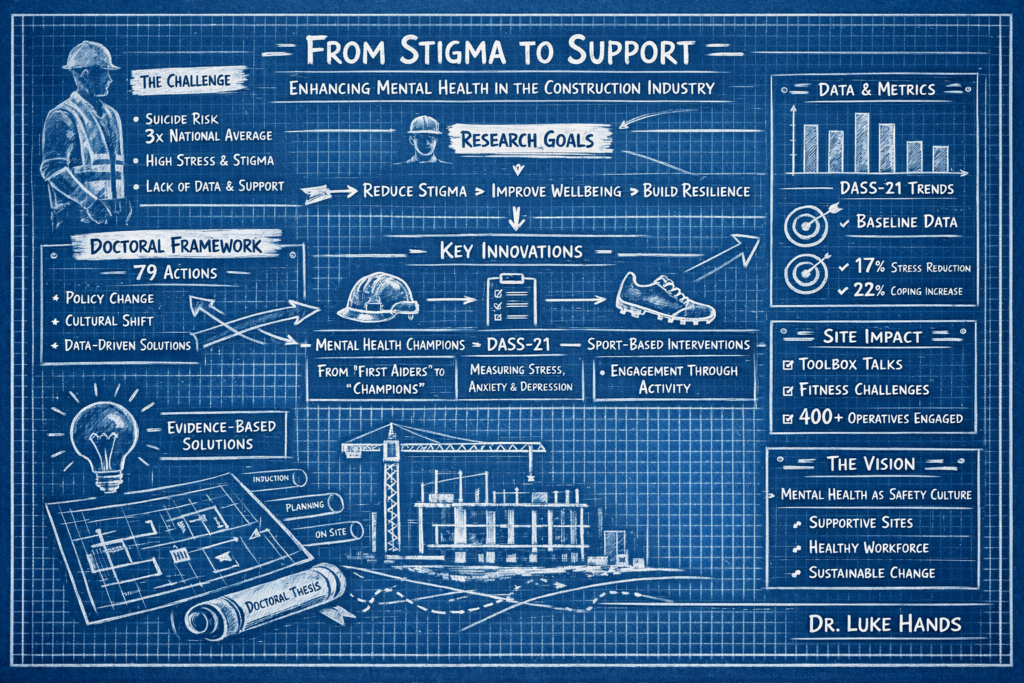
Today, suicide remains the leading cause of death among men under 40 in the UK. Within
construction, the risk is estimated to be up to three times higher than the national average. These
are not abstract statistics. They represent colleagues, friends, supervisors, and family members.
They highlight an urgent need for a new approach – one that treats mental wellbeing with the same
strategic, evidence-based rigour as physical safety.

This article explores how practitioner-led doctoral research has been translated into an organisation-
wide mental health strategy, reframing wellbeing from a reactive duty into a leadership

responsibility. It outlines the development and implementation of Ardmore Group’s “From Stigma to
Support” programme and offers insight into how construction can move from awareness to
measurable, sustainable change.


The Problem: A Reactive and Underdeveloped Approach
Historically, the construction industry’s response to mental health has focused heavily on awareness
campaigns, posters, and short-term initiatives. While well intentioned, many of these efforts lack
evaluation, consistency, and integration into wider business systems. Unlike physical safety, mental
health has rarely been supported by robust data, longitudinal measurement, or structured
intervention frameworks.

During my professional doctorate, “From Stigma to Support: Investigating Employer-Led
Interventions for Enhancing Mental Health in the Construction Industry,” I examined how
construction organisations engage with mental wellbeing and why progress has remained slow. The
research highlighted three consistent barriers:

  1. Stigma, particularly among male-dominated site teams.
  2. A lack of reliable mental health data, limiting targeted intervention.
  3. Over-reliance on reactive support, rather than proactive leadership.
    Construction has successfully reduced physical harm by embedding evidence-based controls,
    incident reporting, and continuous improvement cycles. The research argued that mental health
    must follow the same trajectory.

Building a Research-Led Framework
The doctorate produced a framework of 79 evidence-informed actions for employers, drawing from
construction management, occupational psychology, and public health research. Central to this
framework was the principle that mental wellbeing should be embedded into leadership systems,
project planning, and cultural norms – not bolted on as an optional extra.
At Ardmore Group, this research became the foundation of the “From Stigma to Support” initiative.
The programme was not designed as a campaign but as an organisational change process, aligning
policy, leadership behaviours, site engagement, and performance measurement.

Innovation 1: From First Aiders to Mental Health Champions
One of the most immediate changes was the relabelling of Mental Health First Aiders to Mental
Health Champions.
While “first aider” implies crisis response, the research showed this language often reinforced
stigma and avoidance. Many workers perceived mental health as something that only applied when
someone was already in difficulty.
The term “champion” reframed the role as proactive, visible, and culturally embedded. Champions
were positioned not only as support contacts but as everyday advocates for healthy working
practices, psychological safety, and early conversation.
This shift changed how mental health leadership was perceived across sites. Champions were drawn
from supervisors, managers, engineers, and operatives, embedding wellbeing across organisational
levels. Peer-led engagement increased, and mental health conversations became part of routine site
dialogue rather than emergency response.
Innovation 2: Introducing Data Through DASS-21
A defining feature of the programme was the integration of the DASS-21 (Depression, Anxiety and
Stress Scale) into Ardmore’s wellbeing monitoring. This academically validated tool is widely used in
clinical and research settings but had rarely been embedded into live construction environments.
DASS-21 enabled Ardmore to establish baseline mental health data and track changes over time
across projects and roles. For the first time, wellbeing interventions could be informed by
measurable insight rather than assumption.

This approach allowed the business to:
◼ Identify high-stress roles and work patterns
◼ Track correlations between working hours, job insecurity, and stress
◼ Target support resources more effectively
◼ Evaluate whether interventions were actually improving outcomes
In effect, DASS-21 provided the mental health equivalent of accident statistics – enabling
construction to treat wellbeing as a performance indicator rather than a hidden issue.
Innovation 3: Stigma-Resistant Engagement Through Sport
Another finding from the doctoral research was that traditional mental health workshops can
alienate male-dominated workforces. Many operatives disengage when wellbeing is framed in
clinical or therapeutic terms.
Drawing on research from sport psychology and men’s health, Ardmore introduced sport-based
wellbeing interventions. These included team walking challenges, site fitness competitions, and
project-based physical activity events that subtly embedded mental health messaging into familiar,
performance-oriented formats.
These activities leveraged camaraderie, routine, and peer identity to normalise wellbeing
engagement. Over the past 12 months, more than 200 workers have participated, with 73% stating
they would engage again. Importantly, these events became gateways into broader wellbeing
conversations rather than standalone activities.


Measurable Outcomes
A central aim of the programme was to demonstrate that mental health interventions can produce
measurable, business-relevant outcomes.
Using DASS-21 data and workforce feedback, Ardmore has recorded:
◼ A 17% reduction in high-stress indicators compared to baseline data
◼ A 22% increase in employees reporting positive coping behaviours
◼ An increase in workforce comfort discussing mental health from 56% in 2023 to 84% in 2025
◼ A doubling of the Mental Health Champion network, with representation across all major
projects
These results indicate not only improved wellbeing outcomes but a tangible cultural shift in how
mental health is perceived, discussed, and managed.
Leadership in Practice
For organisational change to be credible, leadership visibility is critical. Alongside strategic development, the programme has been underpinned by consistent site engagement. Over 25 face-
to-face sessions were delivered in 2024 alone, reaching more than 400 operatives and managers through toolbox talks, workshops, and peer forums.

Mental wellbeing is now embedded into Ardmore’s induction process, project planning stages, and
audit systems. This ensures that support structures are introduced from project inception rather
than retrofitted after issues emerge.
Beyond Ardmore: Building Industry Momentum
While the programme was developed internally, its ambition has always been sector-wide impact.
Elements of the framework and DASS-21 integration model have been shared with supply chain
partners and discussed within industry forums. Two partner organisations have begun adopting
similar approaches, extending the influence of the research beyond a single business.
External examiners reviewing the doctoral research highlighted its originality, practical relevance,
and scalability. This reinforces an important message for construction: academic research and site
practice need not exist separately. When aligned, they can generate credible, sustainable
improvement.
Conclusion: A New Standard for Mental Health in Construction
Construction has shown that when leadership commits to evidence-based action, significant change
is possible. The evolution of physical safety demonstrates what can be achieved when data,
accountability, and culture align.


Mental health now requires the same commitment.
“From Stigma to Support” demonstrates how practitioner-led research can inform leadership
strategy, produce measurable outcomes, and build a lasting cultural legacy. By embedding mental
wellbeing into everyday systems, language, and leadership behaviours, the industry can move from
reactive support to proactive prevention.
The challenge ahead is not whether construction should act, but how boldly it is prepared to lead.

Dr Luke Hands DProf, MSc, BSc (Hons), PIEMA, AIOSH, CQP MCQI, CEnv, Csci, MIEnvSc
Director of Health & Safety, Environmental & Quality Assurance, Ardmore

  • Tweet
Tagged under: Ardmore Group, Construction industry, construction research, DASS-21, evidence-based safety, health and safety leadership, mental health, mental health in construction, occupational health, organisational culture, stigma reduction, suicide prevention, wellbeing leadership, workplace wellbeing

Leave a Reply Cancel reply

Your email address will not be published. Required fields are marked *

Recent Posts

  • From Stigma to Support: Redefining Mental Health Leadership in the ConstructionIndustry
  • Safety Transformation: Commitment to Culture
  • Predictive Safety Analytics: Building Smart, Sustainable and Safe Workplaces
  • Pioneering OH&S Excellence in India’s Green Energy Transformation
  • Chef Suresh Pillai: A Culinary Visionary Advancing UN SDG Goals Through Food and Education

Recent Comments

No comments to show.

Recent Posts

  • Safety Transformation: Commitment to Culture

    Safety Transformation: Commitment to Culture, A...
  • Predictive Safety Analytics: Building Smart, Sustainable and Safe Workplaces

    How BAT LATAM is Integrating Technology, Sustai...
  • Pioneering OH&S Excellence in India’s Green Energy Transformation

    Pioneering OH&S Excellence in India’s Green Ene...
  • Chef Suresh Pillai: A Culinary Visionary Advancing UN SDG Goals Through Food and Education

    Chef Suresh Pillai: A Culinary Visionary Advanc...
  • Adani Hazira Port: A Beacon of Safety Excellence and a Model for the Industry

    A Legacy of Leadership Adani Hazira Port Ltd. i...

Recent Comments

    Archives

    • March 2026
    • January 2026
    • November 2025
    • October 2025
    • July 2025
    • January 2025
    • February 2017

    Categories

    • GSS
    • International Safety Awards
    • Ratings
    • Safety Innovation
    • Sustainability Leaders
    • Uncategorized

    Meta

    • Log in
    • Entries feed
    • Comments feed
    • WordPress.org

    WORLD SAFETY FORUM 

    WSF is the fast-growing professional network in Health Safety and Environment Social Governance advocating industries in compliance, supporting governments in policy making and forwarding the industrial Sustainable Development Goals. Global Safety Summit is the Annual Flagship Conference and Award ceremony by WSF. Industrial Awards is encouraging the best practices in Safety Health and Environment Social Governance ESG. WSF propagates the voice of industries viz oil and gas, steel, powerplants, renewable energy, construction, textiles, pharmaceuticals, FMCG, Food and Beverages, Supply Chain and Logistics, Aviation, Agriculture, Road and Transportation, etc to Government and Agencies

    COMPANY

    • Forbes2024
    • Linkedin
    • YouTube
    • Facebook
    • GSS Linkedin
    • GSS Instagram

    Contact us

    Address: Level 30, The Leadenhall Buildin, 122 Leadenhall Street, London, United Kingdom, EC3V 4AB

    Email : memberships@worldsafetyforum.co.uk

    Phone: +447983683123


    © 2025 world safety forum | All rights reserved

    Largest growing membership community for Health Safety Environment & ESG Professional as well as Enterprises

    TOP